









Why reading feels harder after 40: presbyopia and your options
One day the menu is a little blurry. Then you catch yourself holding your phone at arm's length to read a message. If you are in your forties or beyond, this is one of the most common vision changes there is, and it has a name: presbyopia.
What presbyopia is
Inside your eye is a flexible lens that changes shape to focus on things up close. With age, that lens gradually stiffens and the muscles around it lose some of their pull. Focusing on near objects takes more effort, and eventually the eye cannot quite manage it. This is presbyopia. It is a normal part of aging, not a disease, and it happens to everyone in time, usually becoming noticeable in the early to mid forties.
How you know it is happening
- You push books, phones and menus further away to read them.
- Small print is harder in dim light, like a restaurant or a jeepney at night.
- Your eyes feel tired or you get headaches after close work.
- You need brighter light than you used to for the same task.
Presbyopia can also arrive on top of an existing prescription, so someone who is nearsighted may start slipping their glasses off to read. That is the eye working around the change.
Your options
Presbyopia is easy to correct. The right choice depends on how much near work you do and whether you already wear glasses.
- Reading glasses. Simple lenses for close tasks. Good if your distance vision is fine and you only need help up close.
- Progressive lenses. One lens that moves smoothly from distance at the top to near at the bottom, with no visible line. Useful if you switch between your phone, a laptop and the road through the day.
- Bifocals. Two zones in one lens, with a defined line between distance and near.
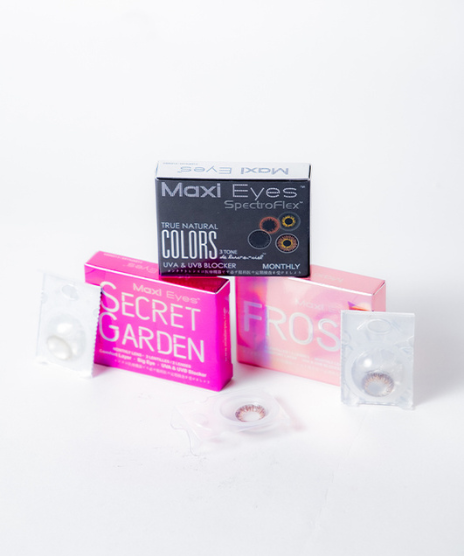
- Contact lens options. Multifocal contact lenses exist for people who prefer not to wear glasses.
Why an eye test matters first
Off-the-shelf readers from a rack all use the same power for both eyes and ignore your PD, astigmatism, and the difference between your eyes. They may get you by, but they often leave one eye working harder than the other. A proper test measures each eye and builds the correction around it.
An eye test after 40 also does something a reading rack cannot: it checks the health of your eyes. Some conditions become more common with age and show no early symptoms, so a comprehensive exam is worth it on its own.
What to ask for at the counter
Book a Vision7 eye test at your nearest Vision Express store. The seven-step exam measures each eye on its own and finds the exact near power you have lost, which is the part a rack of readers cannot do.
Then ask for Essilor Varilux Physio Extensee at the counter. It is a progressive built for the way you actually use your eyes now, with a wide, steady zone through arm's length and near, so your phone, your laptop and the menu all come into focus without you tilting your head to hunt for the sweet spot.
If you spend most of your day switching between screens and people, step up to Shamir Autograph Intelligence. It is designed around your age and your natural focusing habits, so the reading zone sits where your eyes already want to look.
Frames in stock are yours in 20 minutes, and a single vision reading pair can be ready in 30. Progressives are made to your measurements, and we will give you the date at the counter. Every pair comes with free lifetime ultrasonic cleaning and free lifetime custom fitting and adjustment, which matters more with progressives than with anything else.


Leave a Comment