


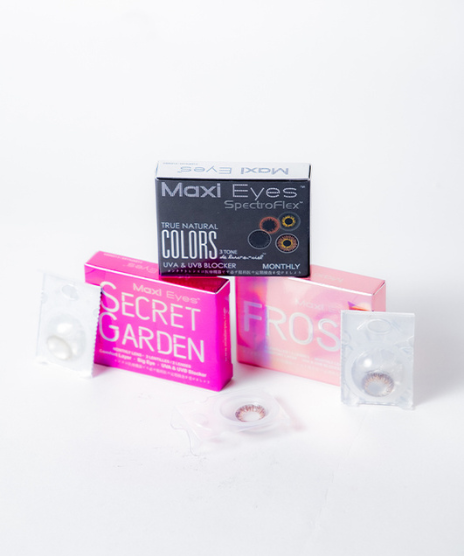







Swimming, chlorine and your eyes: why you should never swim in contact lenses
We live on seven thousand islands. Pools, beaches, resorts, rivers, floods — water is not an occasional thing here. And every summer, people who cannot see without correction face the same decision at the edge of a pool: leave the contacts in, or swim blind.
There is a third option, and the first one is genuinely worth avoiding. Here is why.
The contact lens risk is real
A soft contact lens is porous. It sits against your cornea and it absorbs what is around it. Put it in pool water, sea water, a lake or a hot tub, and it holds whatever is in that water against the surface of your eye for as long as you keep swimming.
The organism that makes this genuinely serious is Acanthamoeba, a microscopic organism found in fresh water, tap water and inadequately treated pools. It can cause Acanthamoeba keratitis, an infection of the cornea that is painful, difficult to treat, and capable of causing lasting vision loss. It is rare — but contact lens wearers make up the large majority of cases, and water exposure is the main route.
Bacterial infection is the more common problem. So is the simpler one: chlorinated water makes lenses swell and stick to the eye, which is how people end up trying to peel a lens off in a changing room. And lenses wash out easily underwater, which is a lost lens and a ruined afternoon.
The same rule applies to showers and hot tubs. Never rinse or store lenses in tap water, and never put a lens back in your mouth to moisten it.
Why your eyes go red after the pool
Most people blame chlorine. Chlorine on its own is not the main irritant. The stronger culprits are chloramines — compounds formed when chlorine reacts with sweat, body oils and urine in the water. That sharp pool smell people associate with a clean pool is largely chloramines, which means a strongly smelling pool is often a less clean one, not a cleaner one.
Chloramines strip the tear film, which is why eyes come out red, stinging and blurry. It normally settles within a few hours.
Sea water stings for a different reason: salt concentration draws moisture out of the eye surface. Fresh water in rivers and lakes carries the highest microbial risk of the three.
What to do instead
- Prescription swimming goggles. The right answer for most people. They correct your vision, seal water out, and cost less than most expect. Available in standard powers off the shelf, or made to your own prescription for stronger or more complex grades.
- Well-fitted plain goggles. If your prescription is mild and you are not swimming laps, goggles plus your own eyes is often enough.
- Daily disposables, only if you must. Not recommended, but if you are going to do it anyway: wear goggles over them, use a fresh pair, and throw them out immediately when you get out of the water. Never reuse them.
After you swim
Rinse your face and eyes with clean bottled or sterile water, not tap water. Use preservative-free artificial tears to restore the tear film. Wait a few hours before putting contact lenses in. Do not rub — irritated eyes rub easily into scratched eyes.
When to get it looked at
See an eye care professional promptly if redness persists beyond a day, if there is real pain rather than mild stinging, if you become sensitive to light, if your vision is blurred and stays that way, or if there is discharge. Pain and light sensitivity after water exposure in a contact lens wearer should be taken seriously and seen quickly — early treatment matters enormously with corneal infection.
Poolside is a UV problem too
Water reflects sunlight straight back up at your face, and so does wet concrete and white sand. If you spend the day at the pool or the beach, the hours out of the water need protection as much as the hours in it.
Sort out your water setup
Visit a Vision Express store and book a Vision7 eye test. A current prescription is what makes prescription goggles worth ordering — and if you are a contact lens wearer, this is the appointment where you should say so, because your fitting and your habits are worth reviewing together.
For the hours out of the water, ask about ordering the Shamir Opulens Exact polarised at the counter. Polarisation cuts the glare bouncing off the water surface and wet tiles, which is exactly the light that makes a poolside afternoon squint-inducing — and it gives you a proper prescription pair for the walk home instead of a compromise. If your everyday pair takes a beating from sunscreen, salt and humidity, ask about the Opulens Ultra 1.60, in stock and ready in 20 minutes.
Every pair carries a 1-year warranty, free lifetime ultrasonic cleaning and free lifetime custom fitting and adjustment — bring them in after summer and we will clean the salt out properly.


Leave a Comment