









Lash extensions, lash lifts and eye makeup: protecting your eyes
Lash extensions have become routine in Manila. Two-week fills, lash lifts before a wedding, eyeliner every working day. It is all happening within a few millimetres of the eye surface, which is a more sensitive neighbourhood than most people treat it as.
None of this is something to give up. It is something to do with a bit more information.
Your lash line is doing a job
Along the edge of each eyelid, just behind the lashes, sits a row of small glands called meibomian glands. They release the oily layer of your tear film, and that layer is what stops your tears evaporating between blinks.
When those gland openings get blocked, the oil layer thins and tears evaporate faster. The result is dry, gritty, tired eyes even though you are producing plenty of tears. This is one of the most common causes of dry eye, and it is directly affected by what happens at the lash line.
Eyeliner applied on the inner rim, behind the lashes, sits directly over those openings. Product left on overnight sits there for eight hours. Neither is catastrophic once; both matter as a daily habit over years.
Lash extensions: what to know
The adhesive is the main consideration. Lash adhesives commonly contain cyanoacrylate. Some people develop an allergic contact reaction to it, showing up as itching, swollen lids, redness and irritation, sometimes after having had extensions comfortably several times before. Sensitisation can develop with repeated exposure.
Extensions change how you clean. Many aftercare instructions discourage getting the lashes wet or rubbing them, which is exactly what makes it easy to stop cleaning the lash line altogether. Debris, oil and makeup then build up along the lid margin. Blepharitis, inflammation of the lid margin, is a common consequence.
Weight and length matter. Extensions that are much longer or heavier than your natural lashes put mechanical stress on the follicle. Traction from over-heavy sets is associated with lash thinning over time.
Technician skill is not a small factor. Extensions should be attached to individual lashes, not to the skin, and not clumped together. Adhesive touching the lid or fumes reaching the eye during application cause a lot of the problems people report.
Lash lifts and tints
These use chemical solutions applied very close to the eye. Reactions are usually irritation from a solution migrating where it should not, rather than an allergy.
The practical rules: only have it done by someone properly trained, keep your eyes closed throughout as instructed, and speak up immediately if you feel stinging rather than waiting politely for the appointment to finish. If solution reaches your eye, it should be flushed with clean water or sterile saline straight away, and you should get seen.
Makeup habits that actually make a difference
- Take it off every night. The single highest-value habit on this list. Use a gentle, eye-safe cleanser rather than scrubbing.
- Keep eyeliner on the outer lash line, not on the inner rim over the gland openings.
- Replace mascara every three months. The wand goes back into a dark, damp tube every use. In Philippine humidity, do not push this.
- Never share eye makeup. Not with your sister, not with your best friend.
- Throw out anything that stings. Repeated irritation is information, not something to tolerate.
- Do not use expired products near your eyes, and do not top up a drying mascara with water or drops.
- Clean the lash line even with extensions on. Ask your technician for a method that is compatible with your set. There is one.
If you wear contact lenses too
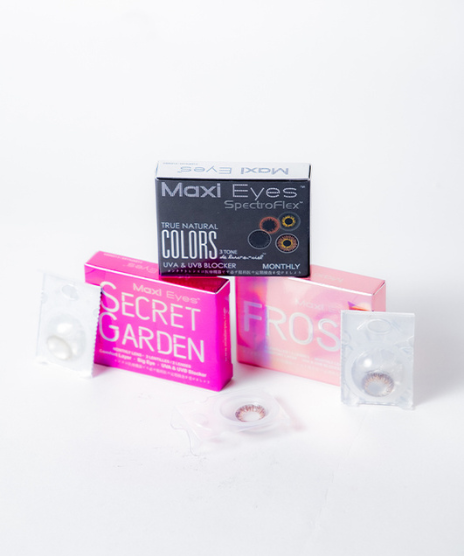
Insert lenses before applying makeup and remove them before taking it off. Loose fibres from extensions or mascara flakes trapped under a lens are a common cause of irritation and can scratch the eye surface. During a lash appointment, lenses should be out.
On days your eyes already feel irritated, wear glasses. A lens on an inflamed eye makes an easy problem into a harder one.
When to get seen
Book an eye test if you have persistent itching or swelling of the lids after a lash appointment, crusting or flaking along the lash line, eyes that feel dry and gritty most days, a lash that has turned inward and is touching the eye, or any pain, light sensitivity or discharge. That last group needs same-day attention.
Also worth knowing: if your eyes feel tired and dry every afternoon and you have assumed it is your lashes or your makeup, it may be your prescription. An uncorrected or slightly outdated grade makes you work harder and blink less, which produces exactly the same symptoms.
Get the real cause identified
Book a Vision7 eye test at your nearest Vision Express store. Step six of our seven-step exam is a visual health examination, which includes looking at your lids and the eye surface. That is how you find out whether your discomfort is coming from the lash line, from dryness, from your prescription, or from something that needs a referral.
For the days you skip contact lenses and wear glasses instead, ask for Opulens Advanced 1.60 at the counter. It is a thin everyday lens, in stock and ready in 20 minutes, so a rest day for your eyes does not mean a day of blurry vision. Having a decent pair of glasses is what makes it realistic to actually give your eyes a break.
If most of your day is on screens, ask about Opulens Blue Light 1.56 instead, built for long monitor hours.
Every pair includes free lifetime ultrasonic cleaning, free lifetime custom fitting and adjustment, and a one-year warranty.


Leave a Comment