


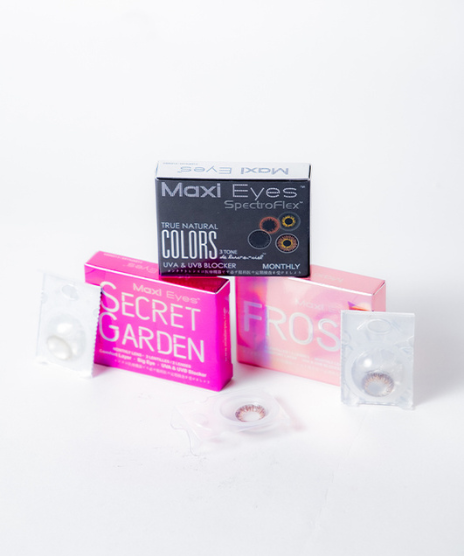







Is it okay to sleep with your contact lenses on?
No — not unless your optometrist has specifically fitted you with lenses approved for overnight wear, and even then the risk is higher than taking them out. Sleeping in daily-wear lenses is the single most common reason people end up in a clinic with a painful, sight-threatening cornea.
This is not a scare tactic. It is the one contact lens rule worth being strict about.
Why closed eyes are the problem
Your cornea has no blood vessels. It takes oxygen directly from the air and from the tear film. When you close your eyes, oxygen supply drops. Add a lens sitting on the surface and it drops further.
A low-oxygen cornea is a cornea with weaker defences. At the same time, the closed eye is warm, still and moist — good conditions for bacteria. Overnight the lens also stops moving, so debris and microbes that would normally be flushed away stay put against the eye.
The result is a meaningfully higher risk of microbial keratitis, an infection of the cornea that can scar it. Scarring on the cornea is permanent, and depending on where it sits, it can reduce vision for good.
What about extended-wear lenses?
Some silicone hydrogel lenses are approved for continuous wear and pass far more oxygen than older materials. They are a real option for shift workers and people who genuinely cannot remove lenses at night.
Two honest caveats. Even with those lenses, sleeping in them carries more risk than taking them out. And they only work if an optometrist fitted you for that schedule after checking your corneal health. Buying a lens described as extended wear online and deciding for yourself is not the same thing.
You fell asleep in them. Now what?
- Do not yank them out. A dry lens can stick to the cornea and pulling it off takes surface cells with it.
- Rewet first. Put in preservative-free lubricating drops, blink several times, wait a few minutes, then remove gently.
- Leave them out for the rest of the day. Wear your glasses and let the surface recover.
- Do not put the same lenses back in if they are dailies. Bin them.
Get seen the same day if you have pain, light sensitivity, a red eye that is not settling, blurred vision or discharge. A corneal infection moves quickly. Do not wait to see if it improves overnight.
The Philippine-specific version of this problem
Two local habits make it worse. The first is the long commute — falling asleep on a bus or in a car after a night shift is exactly the scenario people describe. The second is heat and dust: a lens that has already dried out through a hot day is more likely to stick if you doze off in it.
Air-conditioning does the same thing from the other direction. Dry air plus reduced blinking at a screen leaves the lens surface parched by evening, right when you are most likely to nod off.
The habit that fixes it
Keep a pair of glasses where you actually get tired — in your bag, at your desk, beside the bed. Almost everyone who sleeps in lenses does it because taking them out meant getting up and finding something. Remove that step and the problem mostly disappears.
Come in and get it sorted
Book a Vision7 eye test at your nearest Vision Express store. The visual health step checks the front surface of your eye, which is where lens-related trouble shows up first — often before you feel anything. If you wear contacts, bring them and your solution so our optometrist can review your schedule and fit.
Contact lenses are fitted in store rather than picked off a shelf, so ask about a contact lens fitting at the same visit.
For the backup pair that actually prevents this — the one that lives in your bag — ask for Opulens Advanced 1.60 at the counter. It is in stock and ready in 20 minutes, and the thinner 1.60 material keeps a spare pair light enough that you will carry it. If you want a pair sized for screen hours, ask for Opulens Blue Light 1.56 instead.
Every pair includes free lifetime ultrasonic cleaning, free lifetime custom fitting and adjustment, and a 1-year warranty.


Leave a Comment